XPeng’s Flying Car Could Reach Chinese Buyers Next Summer
XPeng's flying car shows China's interest in these vehicles and the challenges of bringing them to the market.
A $300,000 flying car could reach the Chinese market in the second half of 2027.
XPeng, the Chinese manufacturer that created the car, is targeting recreational users and emergency services with the new vehicle.
According to the Guardian, the chief executive of XPeng Deli Zhao, said the company has spent almost 10 years developing the technology, including testing flying motorbikes. It has recently received approval from China’s aviation authorities for limited use.
How The Flying Car Actually Works
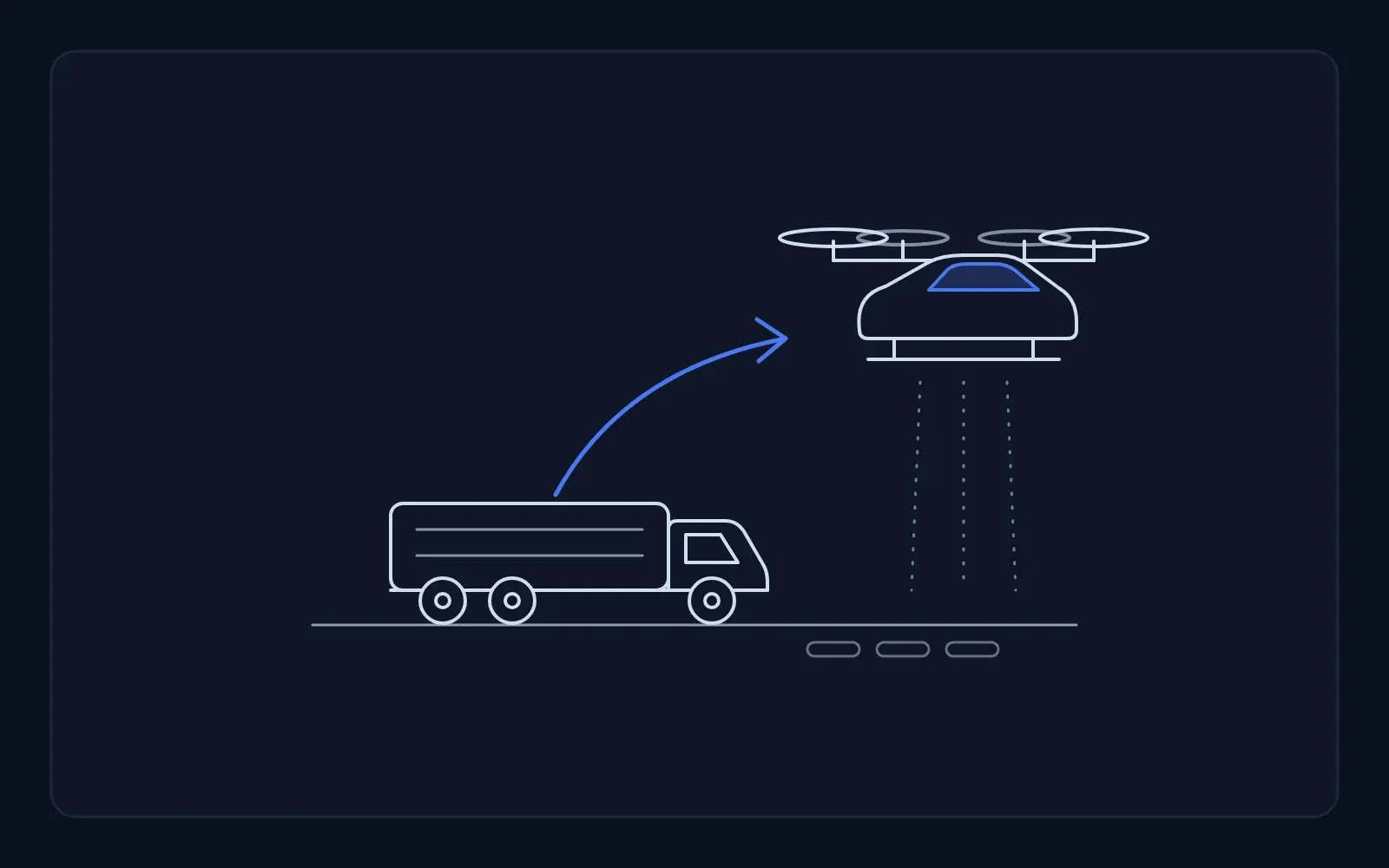
The vehicle looks more like a helicopter. It has a compact cockpit roughly the size of a Fiat 500. It takes off using six drone-like electric propellers and is controlled through a joystick. The aircraft can also fly autonomously to a programmed destination.
The package includes a six-wheel van, approximately the size of a Ford Transit, which carries the aircraft. The flying component unfolds from the back of the vehicle, allowing users to transport it by road before taking off.
The company initially expects to attract customers who want to use it for diving, surfing and off-roading. Emergency services are another target market.
A 30 km Range Limits Where It Can Fly
Despite its planned launch, XPeng’s aircraft will initially operate under significant restrictions. Its flight range is currently 30 km, and it will only be permitted to fly in approved park areas in China or for emergency services.
At the Web Summit in Lisbon on November 10, Zhao said the company intends to double that range by increasing the battery’s energy density to 400 kilowatts per kg.
The aircraft can reach altitudes of up to one kilometer. However, its current capabilities and operating restrictions make it unsuitable as a replacement for conventional cars.
XPeng’s creation also differs from Tesla’s prototype. Elon Musk recently presented a prototype that uses powerful gas blasts to perform movements in the air. Zhao said the car was “really hopping or jumping and not really flying.” The Xpeng car can cruise as high as 1 km above the ground.
China Bets on a New Low-Altitude Economy
XPeng’s plans are part of China’s effort to develop a low-altitude economy built around commercial drones, flying cars and other aircraft used for transportation and services.
According to China government, China’s low-altitude economy is expected to exceed 3,5 trillion yuan ($511 billion) by 2035.
Zhao said XPeng is one of around 20 companies in China working on flying vehicles. That puts it in a crowded field, as other companies also try to turn the idea of flying cars into a commercial business.
Zhao also added that the company had signed agreements with the United Arab Emirates and several countries in Southeast Asia to explore uses for its aircraft. It also hopes to enter the European market.
The Engineering Talent Needed in the Industry
Preparing the aircraft for commercial production will require further improvements in performance, safety and reliability.
Developing flying cars requires expertise in battery technology, aerospace engineering and software development. These specialists help improve flight range, aircraft performance and autonomous navigation.
Finding qualified people to certify new aircraft is another challenge. China has recognized the need for more specialists in flight testing, aircraft safety and certification. The country also lacks enough experts to review aviation software.
XPeng’s success will depend on proving the aircraft is safe and reliable enough for regulators and buyers.